Kimi K3 is Moonshot AI's 2.8 trillion parameter open frontier AI model, released on 16 July 2026. It is the largest open-weight model to date. Kimi K3 rivals many closed models on coding, agent tasks and knowledge work, and beats several of them.
What is Kimi K3?
Kimi K3 is the third major generation in Moonshot AI's Kimi family. The previous version, Kimi K2, had about 1 trillion parameters. K3 raises that to 2.8 trillion, setting a new ceiling for open models. The chart below compares the size of open frontier models over the past year.
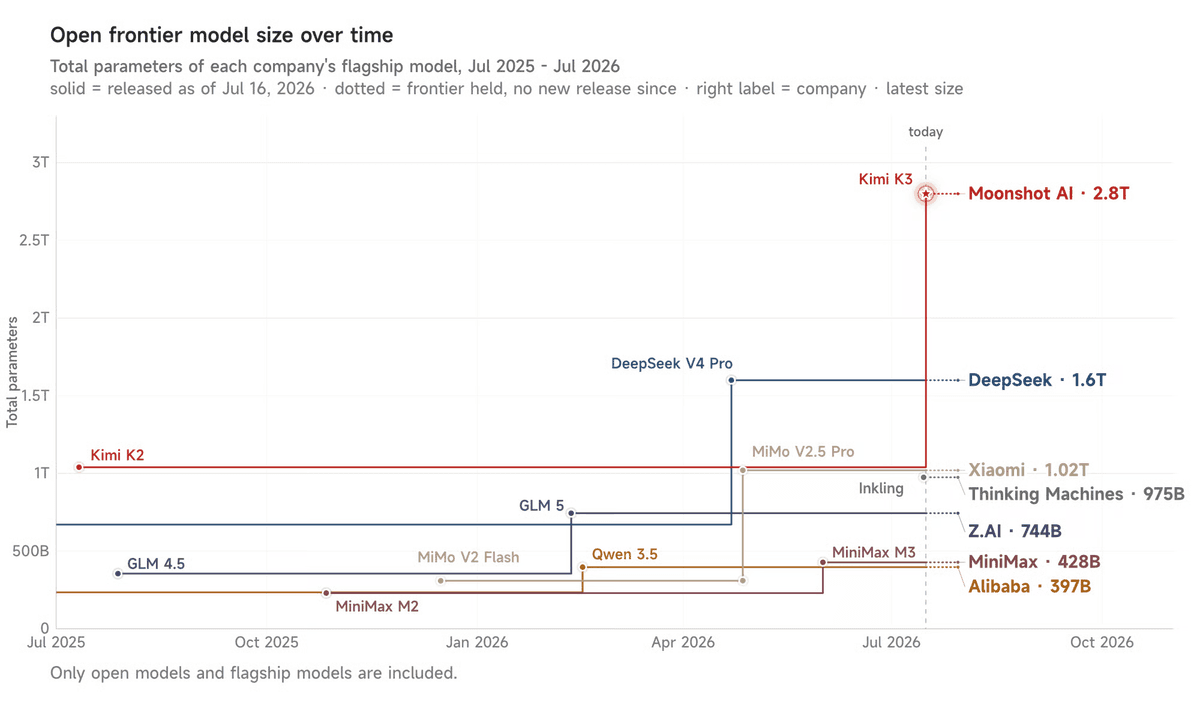
The model sits clearly ahead of other open models such as DeepSeek V4 Pro (1.6 trillion) and Qwen 3.5 (397 billion). This scale helps K3 on tasks that need broad knowledge and long context.
How does the Kimi K3 architecture work?
Kimi K3 blends a Mixture of Experts design with new modules. The core has three main parts: Stable LatentMoE, Kimi Delta Attention (KDA) and a Block Attention Residuals backbone.
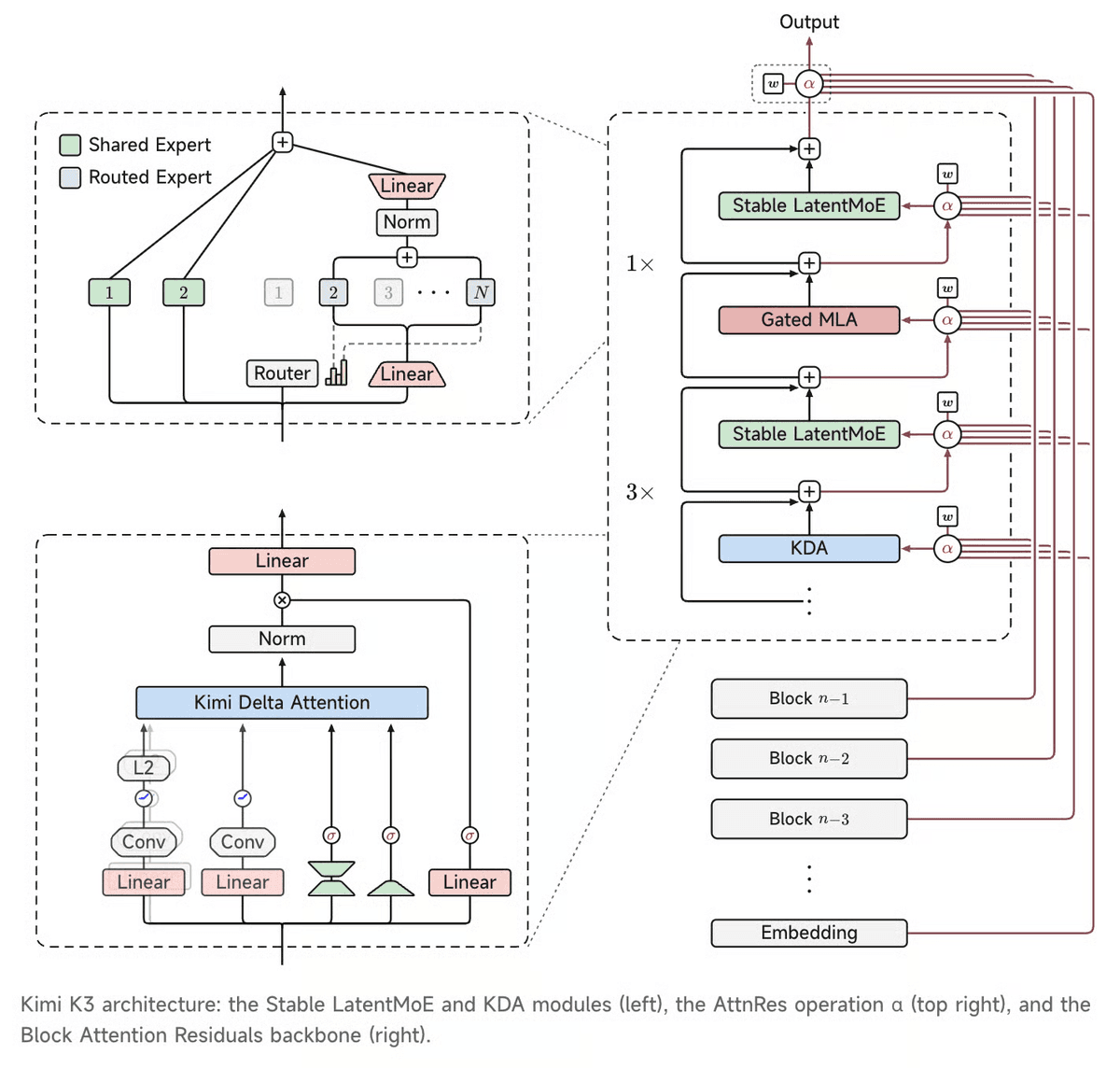
- Stable LatentMoE: Holds shared and routed experts together. A router sends each token to the right expert and keeps training stable.
- Kimi Delta Attention (KDA): The model's own attention mechanism. It cuts compute cost on long context.
- Gated MLA: A gated latent attention layer. It lowers memory use and raises speed.
- Block Attention Residuals: Residual links across blocks that keep the deep network learning stably.
How good is Kimi K3 at coding?
Software development is one of K3's strongest areas. It ranked first on Program Bench and SWE Marathon, ahead of every rival. On Terminal Bench 2.1 it scored 88.3, just half a point behind the leader.
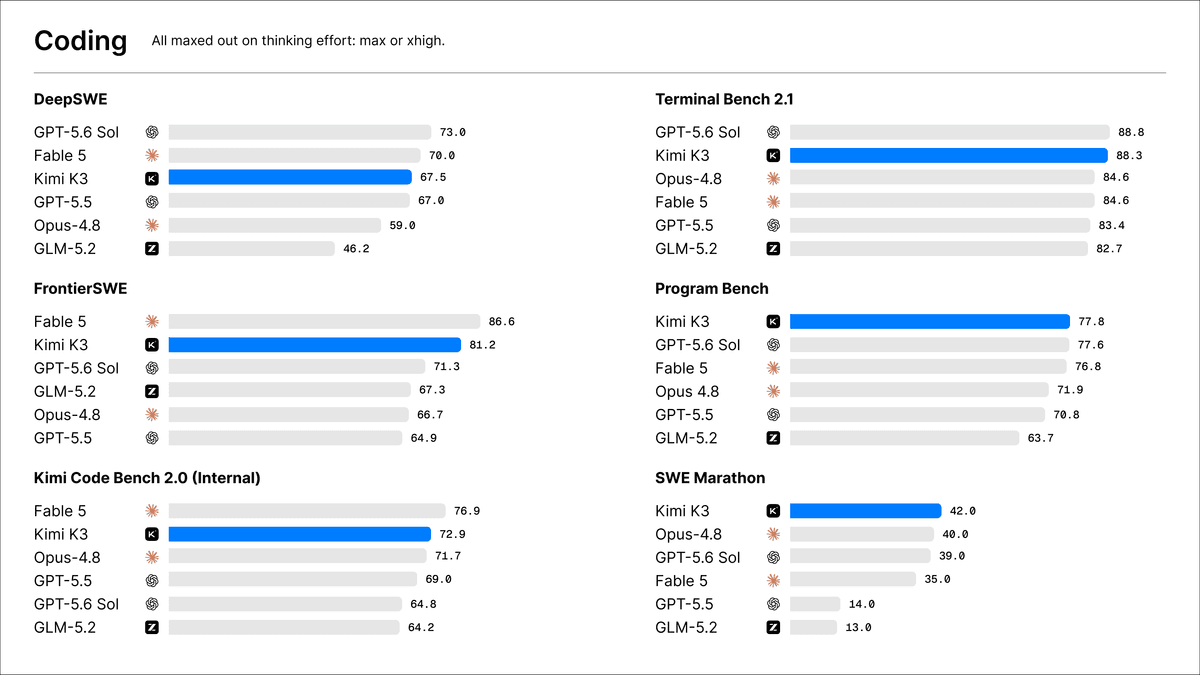
- Program Bench: 77.8 (first)
- SWE Marathon: 42.0 (first)
- Terminal Bench 2.1: 88.3 (second)
- FrontierSWE: 81.2 (second)
These results show K3 is strong on hard tasks such as fixing bugs in real repos and multi-step development. For more on AI-assisted coding, see our guide to software development with AI.
Performance on agent and knowledge tasks
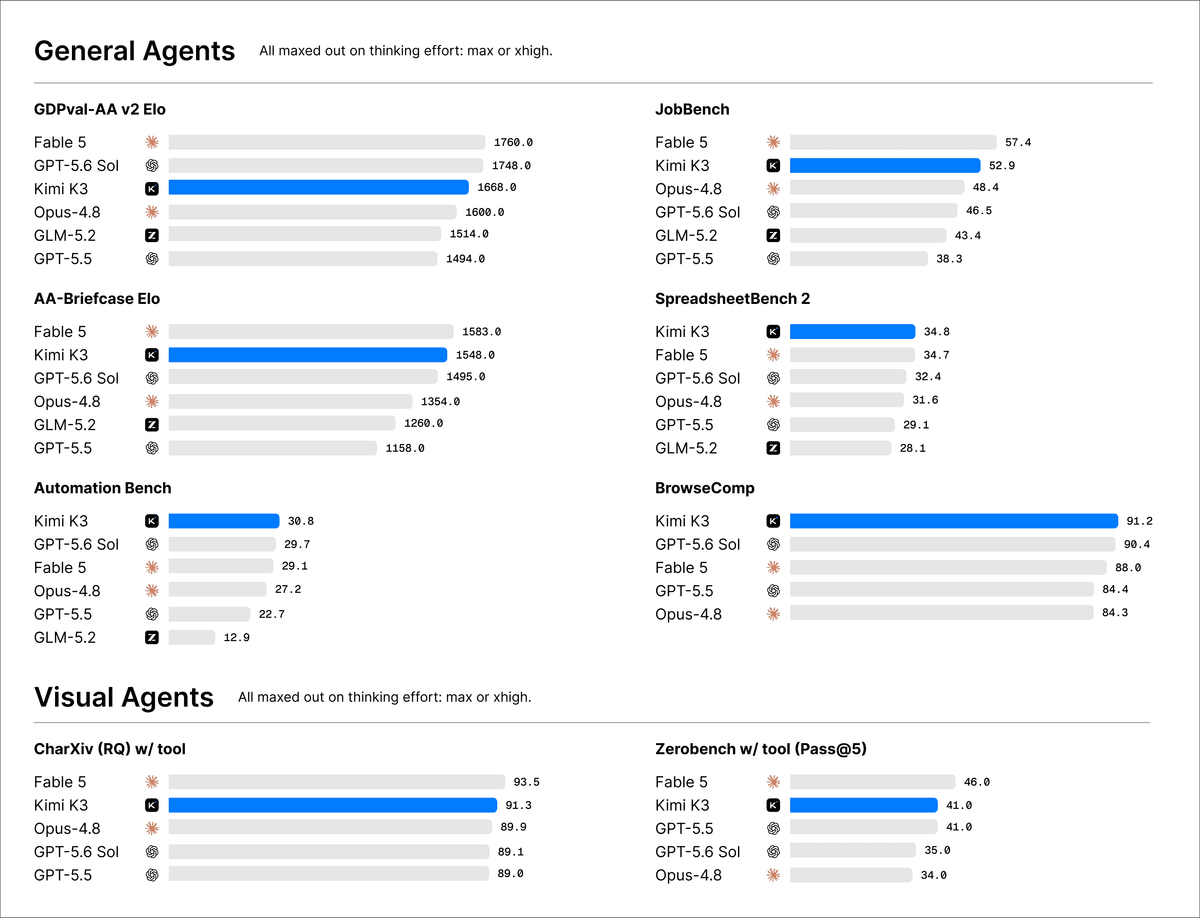
Kimi K3 stands out on agent tasks that use a browser and call tools. It ranked first on BrowseComp with 91.2. It also led on automation and spreadsheet tasks.
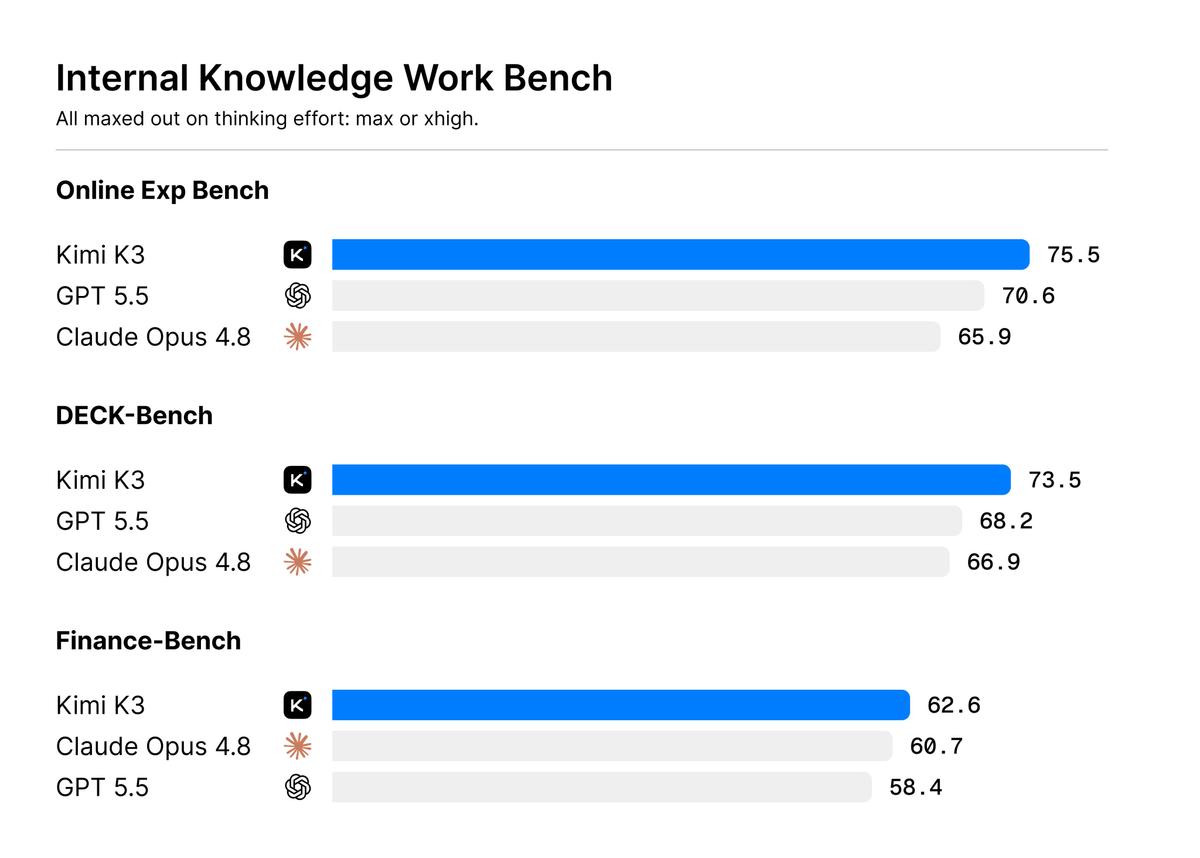
On internal knowledge work benchmarks, the model beat GPT-5.5 and Claude Opus 4.8. It scored 75.5 on Online Exp Bench, 73.5 on DECK-Bench and 62.6 on Finance-Bench, ranking first on all three.
How does Kimi K3 compare to other models?
The table below compares K3's standout benchmarks with the closest rivals. The model leads clearly on agent and knowledge tasks.
| Benchmark | Kimi K3 | Closest rival |
|---|---|---|
| BrowseComp (agent) | 91.2 (1st) | GPT-5.6 Sol 90.4 |
| Program Bench (code) | 77.8 (1st) | GPT-5.6 Sol 77.6 |
| SWE Marathon (code) | 42.0 (1st) | Opus 4.8 40.0 |
| Online Exp Bench (knowledge) | 75.5 (1st) | GPT-5.5 70.6 |
| Terminal Bench 2.1 (code) | 88.3 (2nd) | GPT-5.6 Sol 88.8 |
For a broader view, read our AI model comparison, or our GLM 5.2 review for another open-weight option. For a closed flagship, see our GPT-5.6 Sol article.
How do you access Kimi K3?
You can use Kimi K3 in two ways. For the chat interface, visit Kimi's official launch page. Developers access it through the API. Setup steps are in the official quickstart guide. Because the model is open-weight, you can also run it on your own infrastructure.
Frequently asked questions
Is Kimi K3 open source?
Kimi K3 is an open-weight model. The weights are shared, so you can run it on your own server. Verify the license terms in the official announcement.
Which tasks is Kimi K3 best at?
The model excels at browser-based agent tasks, software development and knowledge work benchmarks. It ranked first on BrowseComp, Program Bench and SWE Marathon.
Does Kimi K3 support other languages?
Yes. Kimi K3 is a multilingual model and can process many languages. Answer quality varies by task.