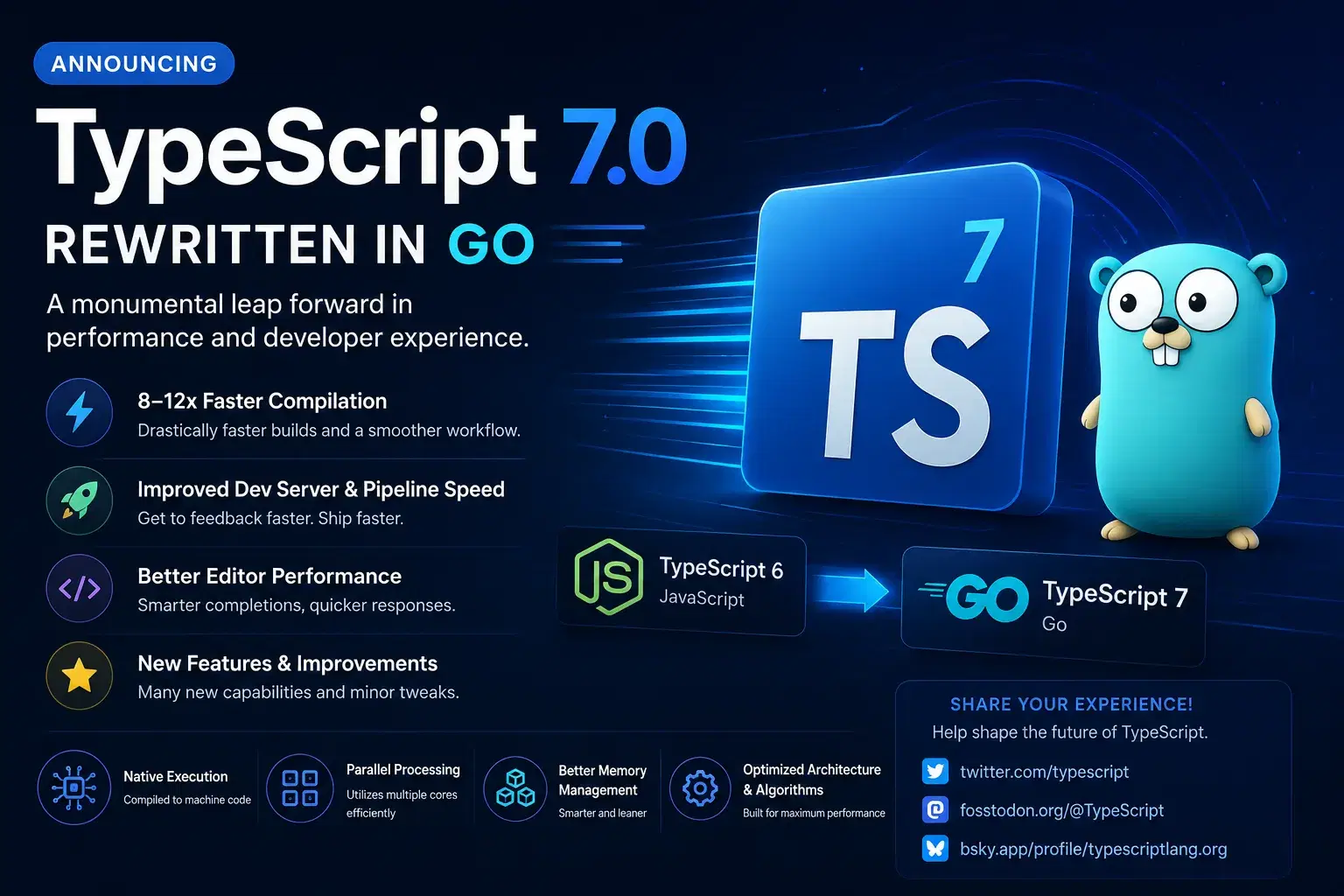
TypeScript 7 has been rewritten in Go, delivering 8 to 12 times faster compilation than TypeScript 6. This is not a minor feature update, it's a complete rebuild of the compiler's architecture. Microsoft officially released the Go-based version a few days ago.
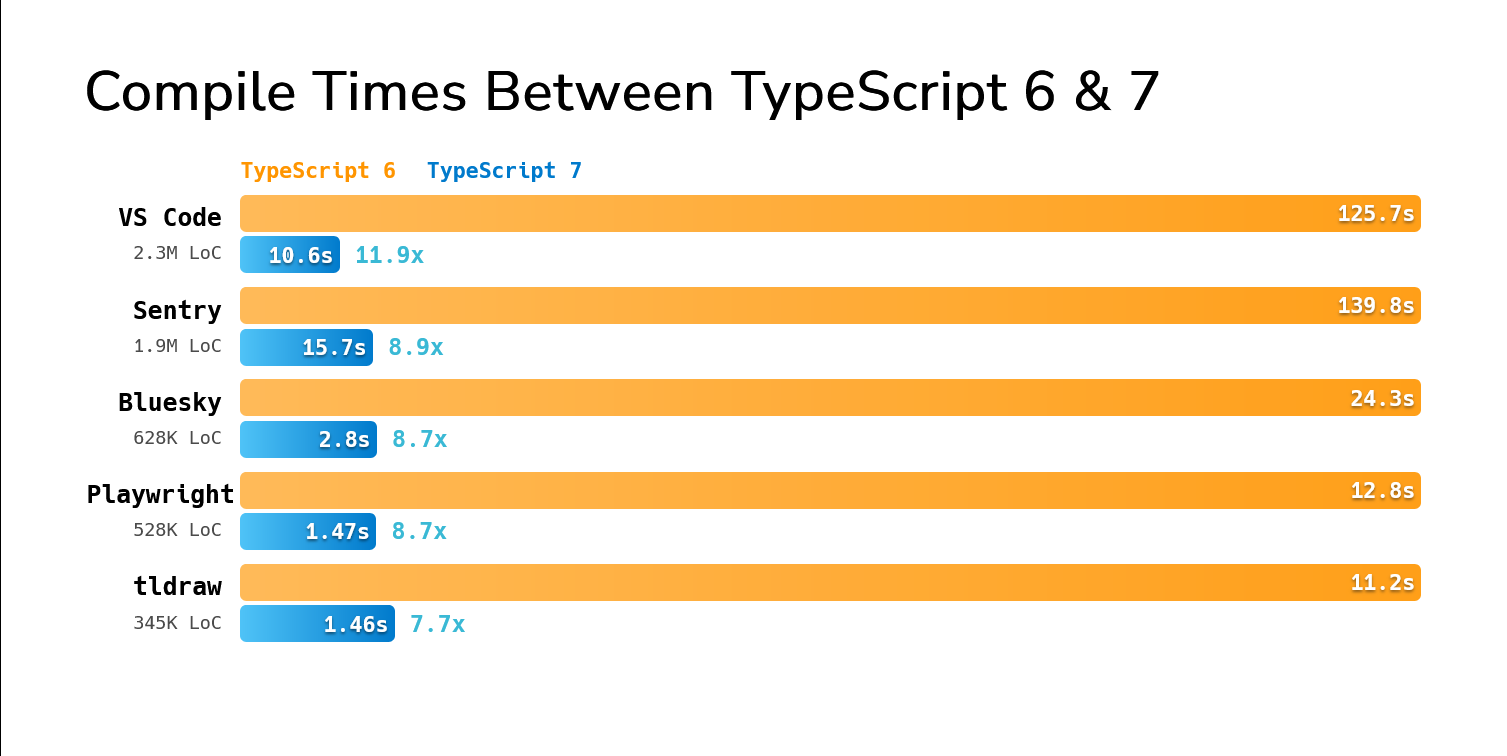
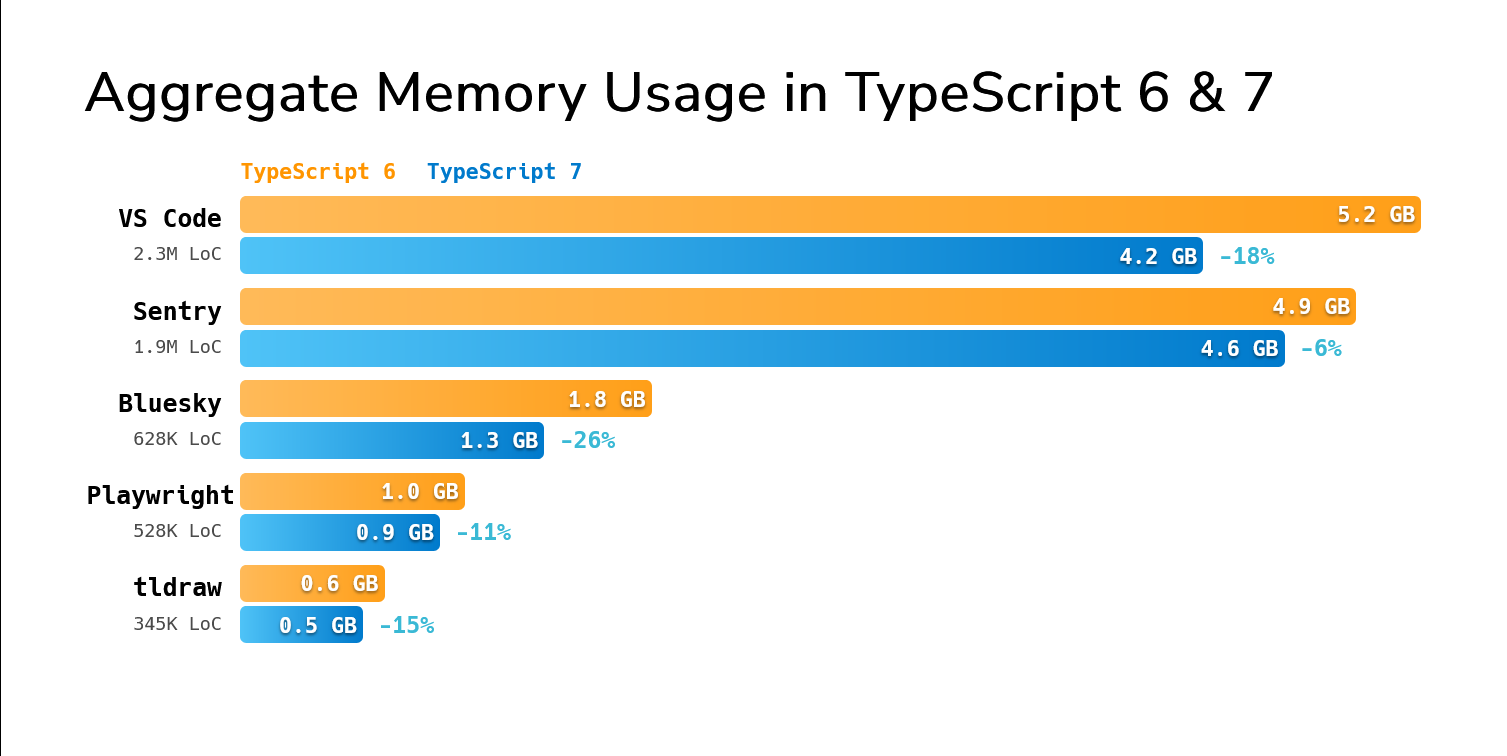
What Makes TypeScript 7 Different from TypeScript 6? Compiler Rewritten in Go
The core difference is the language switch from JavaScript to Go. The compiler now runs as a native Go application compiled directly to machine code, instead of JavaScript on Node.js. Go's built-in multicore support, efficient memory management, and Microsoft's architectural optimizations during the rewrite all contribute to the speed gain. The result: development pipelines start faster, editor performance improves, and several new features are introduced.
According to Microsoft's data, TypeScript 7 compiles 8 to 12 times faster than TypeScript 6. The team spent the last year almost entirely on this rewrite, calling it one of the most important milestones in the project's history. Future releases will focus on new features, developer experience, performance optimizations, and a new API for ecosystem tools. New releases are planned every 3,4 months.
Why Is TypeScript 7 So Much Faster?
The speed increase is not just from switching languages. It comes from four factors:
Native execution: Go compiles to machine code, avoiding Node.js overhead.
Parallel processing: Go's built-in concurrency handles multicore workloads efficiently.
Memory efficiency: Go's garbage collection and memory model reduce pauses.
Architectural optimizations: Microsoft reworked the compiler's algorithms during the rewrite.
For a deeper look at type-safe development, check out our TypeScript Type-Safe Development guide.
What's Next for TypeScript?
Microsoft is inviting developers to share feedback on social media. You can follow them on Twitter, Mastodon, or Bluesky.
As the Kritm team, we plan to upgrade our projects once TypeScript 7.1 is released. If you're interested in modern development setups, see our guide on CI/CD pipeline setup.
For the full release notes, visit the official announcement.